This post contains affiliate links. As an Amazon Associate I earn from qualifying purchases. Learn more.
Let’s be honest, few things are as satisfying in the kitchen as efficiently dicing an onion or perfectly slicing a tomato. And few things are as frustrating (and potentially dangerous!) as struggling with a dull blade or feeling clumsy with your knife. Good knife skills aren’t just for professional chefs; they’re a total game-changer for home cooks, making meal prep faster, safer, and a whole lot more enjoyable. Think about all those glorious summer salads, grilled veggie platters, and fresh fruit desserts – they all start with a good chop!
Many folks shy away from really learning how to use a knife properly, thinking it’s too complicated or intimidating. But we’re here to tell you it’s totally achievable, and with a little practice, you’ll be slicing and dicing like a seasoned pro. Plus, a sharp knife is a happy knife – and a safer one!
The Foundation: Knife Safety First!
Before we get into fancy cuts, let’s talk safety. This isn’t just about avoiding nicks; it’s about building confidence and efficiency. A confident cook is a fast cook!
Choose the Right Knife for the Job
Chef’s Knife: This is your workhorse. Typically 8-10 inches, it’s great for chopping, slicing, dicing, and mincing most ingredients. If you only have one good knife, make it a chef’s knife.
Paring Knife: Small (2-4 inches) and nimble, perfect for delicate tasks like peeling small fruits and veggies, coring strawberries, or trimming.
Serrated Knife: Think bread knife! Its saw-like edge glides through soft foods with tough exteriors, like bread, tomatoes, or even roasted meats, without squishing them.
Hold It Right: The Claw Grip and the Pinch Grip
This is where many home cooks can make a big improvement! How you hold both the knife and the food makes a huge difference in control and safety.
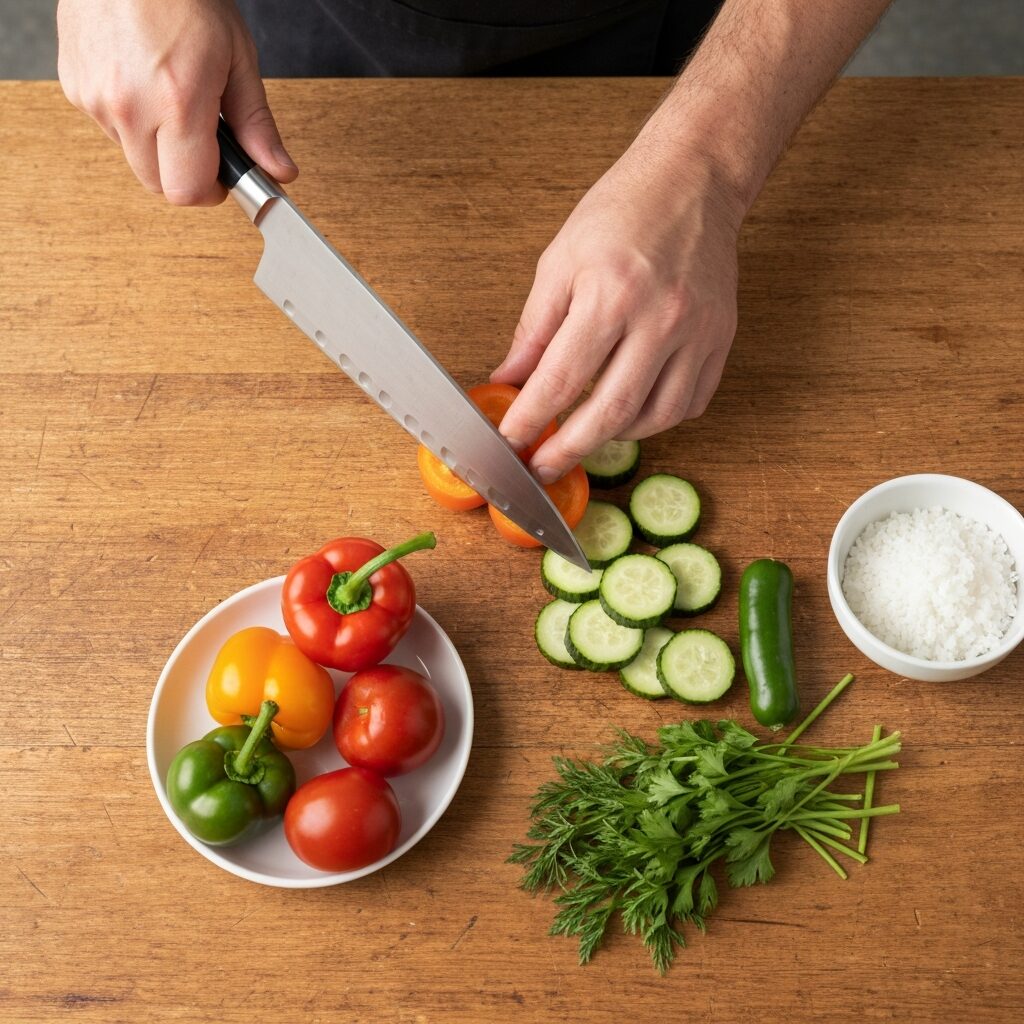
The Pinch Grip (for the knife): Forget wrapping your whole hand around the handle. For maximum control, hold the knife with your dominant hand by pinching the heel of the blade (the part where the blade meets the handle) between your thumb and forefinger. Your other three fingers wrap around the handle. This gives you much more leverage and precision.
The Claw Grip (for your non-knife hand): This is your ultimate safety shield! When holding food, curl your fingertips inwards, creating a “claw” shape. Your knuckles should be pressed against the side of the blade as a guide, keeping your precious fingertips safely tucked away from the sharp edge. As you slice, your knuckles guide the blade down the food.
Keep It Sharp: A Dull Knife is a Dangerous Knife
It sounds counter-intuitive, right? But a dull knife requires more force to cut, increasing the chances of it slipping and causing an injury. A sharp knife glides through food with minimal effort. You don’t need to be a sharpening wizard; a simple honing steel (which realigns the blade’s edge) or an easy-to-use pull-through sharpener will make a world of difference. Aim to hone your knife before almost every use, and sharpen it every few months, depending on use.
Essential Cuts Every Home Cook Needs
These are the foundational cuts that will serve you well in almost any recipe. Practice makes perfect, so don’t be afraid to grab a few extra carrots or onions to get the hang of it!
The Basic Slice (Up-and-Down Motion)
When slicing, remember your knife isn’t a cleaver! It’s designed to slice through food, not just hack at it. Use a smooth, rocking motion: the tip of the knife stays in contact with the cutting board (or very close to it) while the heel lifts and pushes down, creating a forward-and-down slicing motion. This utilizes the full length of the blade and makes for cleaner cuts.
Dicing an Onion Like a Pro
This is a classic technique that will save you so much time and make your dishes look more professional. Plus, consistent dice sizes mean everything cooks evenly!
Prep: Cut the onion in half lengthwise (from root to stem). Peel off the outer skin. Lay one half flat on your cutting board, cut-side down, keeping the root end intact (it holds everything together!).
Horizontal Slices: With your knife parallel to the cutting board, make 1-2 horizontal cuts into the onion, stopping before you reach the root end. (The number of cuts depends on the size of the onion and how fine you want your dice.)
Vertical Slices: Now, make vertical slices into the onion, perpendicular to your horizontal cuts, again stopping before the root end. Keep your “claw grip” firm and use your knuckles as a guide.
The Dice: Finally, turn the onion and slice downwards, perpendicular to your previous cuts. As you slice, beautifully diced onion pieces will fall away. Discard the root end.
Mincing Garlic (The Quick Method)
No need for a garlic press, which can be a pain to clean! Mincing garlic with a knife is fast and efficient.
Smash & Peel: Lay a garlic clove on your cutting board. Place the flat side of your chef’s knife on top and give it a good whack with the heel of your hand. The skin will loosen, making it easy to peel.
Slice & Chop: Roughly slice the peeled clove, then gather the slices together. Rock your knife over the pile, chopping until you reach your desired mince size. For an even finer mince, add a pinch of salt to the garlic while chopping; the salt helps break down the cell walls.
Chopping Herbs (Keep it Fresh)
Whether it’s fresh parsley, cilantro, or basil for a summer dish, chopping herbs can be simple.
Stack & Roll: For leafy herbs like basil, stack a few leaves on top of each other, roll them tightly into a cigar shape (this is called a chiffonade, for thin ribbons!), and then slice across.
Gather & Chop: For other herbs like parsley or cilantro, gather a bunch into a tight pile. Use your rocking motion to chop through the pile, gathering it back together as needed until you reach your desired fineness.
Common Mistakes to Avoid
Using a Dull Knife: We can’t stress this enough! It’s the most common and dangerous mistake.
Ignoring Your Cutting Board: Make sure your cutting board is stable. A damp paper towel or non-slip mat underneath will keep it from sliding around. Plastic or wood are best; glass boards are terrible for your knife’s edge.
Incorrect Grip: Not using the pinch grip on the knife or the claw grip on your food drastically reduces control and safety.
Rushing: Take your time, especially when learning. Speed will come with practice. Focus on precision and safety first.
Dishwasher Damage: Never put good knives in the dishwasher. The harsh detergents and banging around will dull the blade and can damage the handle. Hand wash immediately after use and dry thoroughly.
Recommended Tool: A Quality Chef’s Knife & Honing Steel
You don’t need a whole block of expensive knives, but investing in one good chef’s knife and a honing steel will transform your cooking experience. Look for a knife that feels balanced and comfortable in your hand.
A great starting point is a German or Japanese style chef’s knife. For honing, a simple steel rod will help maintain your edge between sharpenings.
Chef’s Knife:(paid link) – Find one that fits your budget and hand feel.
Honing Steel:(paid link) – A simple tool for maintaining your blade’s edge.
So, go ahead and grab your knife, practice a few of these techniques, and get ready to enjoy faster, safer, and more satisfying meal prep. Happy chopping!
Elevate your grilling game with our essential guide to marinades and rubs! Learn how to infuse flavor, tenderize, and create delicious crusts for all your outdoor cooking adventures.
Today I completed my first ever Daring Bakers challenge. My mission: make a caramel cake with caramelized butter frosting. Last month they made pizza. Pizza I could have done. This? This is real baking, but who am I to back away from a challenge just because I am a crap baker? Isn’t that why I…
Zombie Cupcakes: From the Grave to the Table with 16 Cupcake Corpses I’ve been catching up on The Walking Dead Season Two the past several nights. I’m really enjoying the drama, the characters, the production, really…all of it. Still, for those of you who have seen the show, you’ll believe me when I say it’s not…
I can’t believe I’m doing this… Spam Sushi Okay, so really, there are so many things wrong with spam sushi including: It’s spam It’s spam It’s sushi made from spam But it’s soooo good! I hadn’t thought about it for a while, but @eatlikeagirl was talking about spam on Twitter and I opened my big…
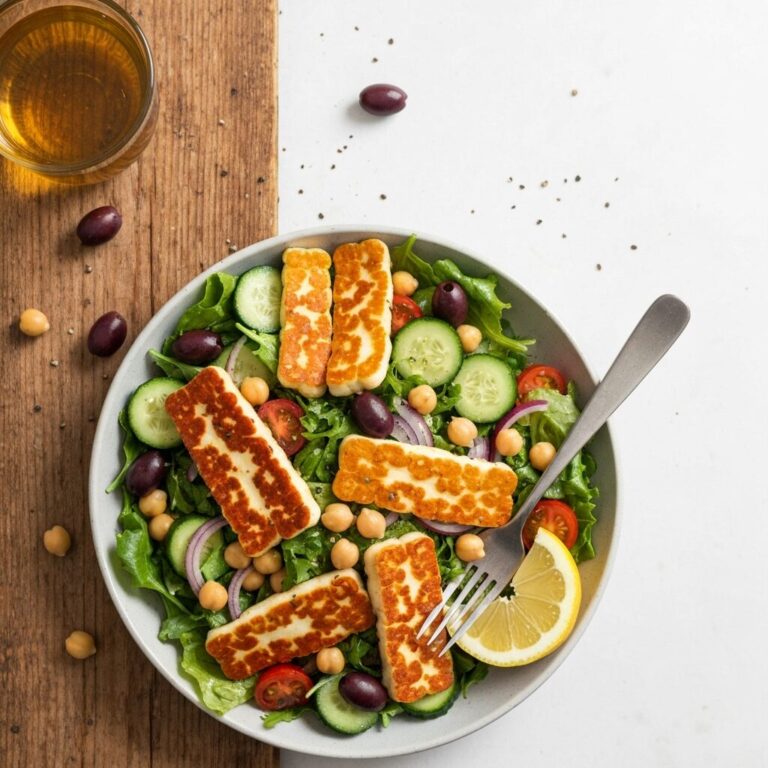
Whip up a vibrant, protein-packed Mediterranean-inspired salad featuring pan-seared halloumi and fresh chickpeas for a delicious weeknight meal that’s ready in under 30 minutes.
Braising is two-step cooking process in which meat or vegetables are first cooked in a skillet to promote browning and then cooked in a flavorful liquid over a long period of time. However, unlike stewing or poaching, the food is not totally submerged in the liquid. Cooks braise when they want to soften tougher cuts…